

The Murty Science Fellowship
For the first time, an Indian fellowship is presenting a global platform.
Funding and support are structured to match the best international fellowships, awarded to scientists working at Indian institutions. Because where you do your science shouldn't determine what you can achieve.
Scroll
The Fellowship
Exceptional science. On Indian soil.
India has the talent. It deserves the resources.
The Murty Science Fellowship provides India's most ambitious early-career scientists with the resources to build world-class research programs at home. No trade-offs. No compromise on ambition. Sustained fundamental research, empowered through continued support and discretionary funds.
Up to ₹5 Cr
World-class support, rooted in India
Annual cohorts
International network and research retreat
Fellowship Support
Structured for scientific independence.
Flexible, sustained support and discretionary funds benchmarked to global norms — enabling Murty Science Fellows to build independent research programs in India.
i.
Research funding
Research expenses, equipment, and activities — complementary to host institute support.
ii.
Hiring support
Funds to recruit postdoctoral researchers, graduate students, and technical staff beyond what the host institute can provide.
iii.
International collaboration
Travel support for active research collaborations, conferences, and specialty workshops hosted in India.
iv.
Recognition & awards
Faculty awards to bring individual support in line with average global norms, recognising the fellow's standing.
v.
International network & mentorship
A peer cohort, access to the Trust's scientific network, and an annual retreat where fellows present their work.
vi.
Administrative support
Dedicated administrative assistance so fellows can focus on science rather than institutional overhead.
2025 Cohort
Murty Science Fellows.
Each fellow was selected to ask a harder question — how to bring globally benchmarked science to India. In partnership with their host institutions, the fellowship gives them generous resources and assistance to pursue ideas on their own terms.

Neuroscience
Why does the brain update what it knows about space — and when does movement trigger that update?
Dr. Joshi's laboratory investigates how the brain integrates cognition and movement in real time. She has demonstrated that hippocampal spatial representations update rhythmically in synchrony with locomotion — advancing understanding of how learning, memory, and decision-making are physically embodied.
Dr. Abhilasha Joshi
NCBS–TIFR, Bengaluru · PhD, University of Oxford

Theoretical Neuroscience
Can the rules of how neural networks organise themselves be written down as mathematics?
Dr. Chandra uses mathematical and computational tools to uncover the fundamental principles by which neural circuits give rise to learning, memory, and spatial navigation. His work on grid cells — the brain's internal GPS — has contributed to landmark publications advancing understanding of modular neural organisation and memory stability.
Dr. Sarthak Chandra
ICTS–TIFR, Bengaluru · PhD, University of Maryland

Condensed Matter Physics
What makes strange metals strange — and why does it matter for superconductivity?
Dr. Patel investigates strongly correlated quantum materials and the physics of strange metals — materials whose electrical behaviour defies conventional theory. His 2023 Science publication demonstrated how microscopic disorder can produce universal transport behaviour, linking condensed matter physics with ideas from quantum field theory.
Dr. Aavishkar Patel
ICTS–TIFR, Bengaluru · PhD, Harvard University

Mathematics
How do geometric structures deform, break apart, and recombine — and what does that tell us about reality?
Dr. Swaminathan works in symplectic topology and enumerative geometry, developing new mathematical tools to understand how geometric structures behave at their limits. His research strengthens theoretical foundations connecting modern geometry and mathematical physics, published in leading journals including Duke Mathematical Journal.
Dr. Mohan Swaminathan
TIFR Mumbai · PhD, Princeton University
How Candidates Are Chosen
A rigorous, five-stage selection process.
The fellowship is designed to identify candidates capable of sustained scientific excellence and long-term leadership — not just impressive early results.
i.
Nomination by host institution
Eligible Indian research institutions nominate up to two candidates per year, including a CV and reference letters. Self-nomination is not permitted.
Because the fellowship is for those with a reputation that precedes them — and the trust of their institution behind them.
ii.
Written research proposal
Screened nominees submit a detailed proposal demonstrating research scope, originality, and barrier-breaking potential, evaluated against a common rubric by independent reviewers.
Because the work that changes a field starts with a vision, not just a track record.
iii.
Mentorship screening
Current and former mentees of top-ranked nominees provide references directly to the Trust. Mentorship is a core criterion — the fellowship is invested in building resilient scientific communities.
Because science built to last is science built through people.
iv.
Video presentation and interview
Finalists submit a 15-minute recorded presentation followed by a virtual Q&A with the Selection Committee. Communication of ideas is treated as inseparable from their quality.
Because the ability to communicate an idea is inseparable from its quality.
v.
Selection committee decision
Awardees are notified following final deliberations by the Selection Committee — distinguished international scientists whose collective judgment sets the standard for the fellowship.
The result is a new cohort of Murty Science Fellows.
Selection Committee
Scientific judgment at the highest level.
Chaired by Prof. Shrinivas Kulkarni (Caltech, RAS Gold Medal 2026), the committee brings international scientific depth and global perspective to every fellowship decision.
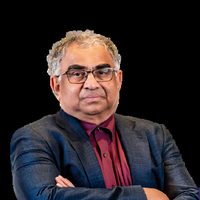
Prof. Shrinivas Kulkarni, FRS
Caltech · Chair
George Ellery Hale Professor of Astronomy. Shaw Prize in Astronomy (2024); RAS Gold Medal (2026). Member, U.S. National Academy of Sciences.
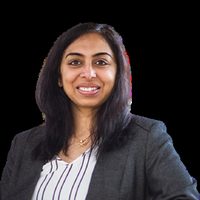
Prof. Yamuna Krishnan
University of Chicago
DNA nanotechnology and intracellular sensing. Infosys Prize in Physical Sciences (2017). NIH Director’s Pioneer Award.
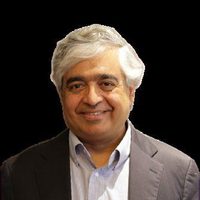
Prof. Subir Sachdev, FRS
Harvard University
Herchel Smith Professor of Physics. Dirac Medal (2018), Onsager Prize (2018). Member, U.S. National Academy of Sciences.
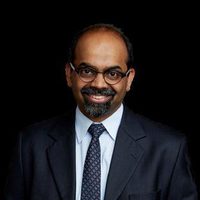
Prof. L. Mahadevan, FRS
Harvard University
Lola England de Valpine Professor of Applied Mathematics, Physics, and Organismic & Evolutionary Biology. MacArthur Fellow. Simons Investigator. Member, U.S. National Academy of Sciences.
For Host Institutions
Who is eligible — and how to nominate.
The fellowship is a partnership between the Murty Trust, the fellow, and the host institution. A Memorandum of Understanding is required for each individual fellowship. Fellowship funds are complementary to — not a replacement for — institutional support.
Eligible researchers
- Within 7 years of PhD thesis defence at time of nomination
- Working across physical sciences, life sciences, mathematics, engineering, or computer science
- Nominated directly by the host institution — self-nomination is not accepted
- Demonstrated research depth, originality, and mentorship potential
Eligible institutions
- Legal Indian entities: academic, research institutions, or non-profit bodies
- Preference given to degree-granting institutes
- Each institution may nominate up to two researchers per year
- Nominations strengthened by alumni of MSF or Infosys Prize

If you're hiring an exceptional early-career scientist, we want to hear from you.
Reach out to the fellowship team to discuss nominations, eligibility, or partnership questions.
fellowship@murtytrust.org